
- Qualifi Level 7 Unit 708 Strategic Marketing Assignment Brief 2026
- Qualifi Level 7 Unit 706 Strategic Direction Assignment Brief 2026
- Qualifi level 7 Unit 705 Leading a Strategic Management Project Assignment Brief 2026
- Qualifi level 7 Unit 704 Information Management and Strategic Decision Taking Assignment Brief 2026
- Qualifi Level 7 Unit 703 Finance for Managers Assignment Brief 2026
- Qualifi Level 7 Unit 702 Manage Team Performance to Support Strategy Assignment Brief 2026
- SWE4202 Computing Infrastructure Assignment 1 and 2 Brief 2026 | University of Bolton
- ITAO7104 Data-Driven Decision-Making Assignment Brief 2026 | QUB
- ED3606 Education and Research 3 – Dissertation Brief 2026 | Brunel University of London
- Qualifi Level 6 BA602 Management of Salesforce Assessment Brief 2026
- MLA603 Maritime Regulation & Governance Assignment Information 2026 | MLA College
- ILM Unit 507 Understanding the Organisational Environment Assessment 2026
- Advanced Management Accounting Assessment Information 2026 | University of Salford
- GEOG20091 Sustainability Formative Assessment Brief 2026 | Nottingham Trent University
- 6BM500 Business Psychology Assessment Brief 2026 | University of Derby
- MS1S463 Problem Solving for Computing Assessment Brief 2026 | USW
- HWSC5005 Applied Research in Practice Assignment Brief 2026 | OBU
- Qualifi Level 7 Unit 724 Development as a Strategic Manager Assignment Brief 2026
- A6001C17 Advances in Animal Production Science Assignment Brief 2026 | HAU
- SOCI5270 Contemporary Sociological Theory Essay Assessment 2026 | UOK
MLA603 Maritime Regulation and Governance Assessment Brief 2025 | MLA College
| University | MLA College |
| Subject | MLA603 Maritime Regulation and Governance |
MLA603 Assessment
There is one summative assessment for MLA603. The assessment brief starts on page 9, but please read carefully all the information provided below.
Assessment deadline: Sunday 28th December 2025, 23:59 UK time (end of week 13)
Deadlines are very important. If you think you may miss a deadline, inform your tutor as soon as possible. Consult the TLP for further information.
If you have studied before with MLA College, you should notice that this document includes a new section on the use of Artificial Intelligence (AI) for the preparation of your coursework – please carefully read this section as inappropriate use of AI may be considered an Academic Misconduct.
Introduction
Please read this document carefully as it gives the information you need to complete your coursework for this module. We advise you to get in touch with your tutor as soon as possible if anything is unclear. During your studies with MLA College, you may be assessed through some or all of the following types of assessment:
Formative assessment
Formative assessment is a collection of questions and tasks to test your knowledge of the lectures you have just watched. Formative assessment questions can be found throughout the Total Learning Package (TLP) alongside the video lectures, after the lectures or included in the transcripts. They allow you to work through problems at your own pace to satisfy yourself that you have fully understood the teaching and learning which has been covered in the lecture.
We have provided all the answers to the formative questions, so that you can compare your answers with the ones provided and re-visit the lectures if necessary. You may also wish to discuss these in tutorials, or online with your fellow students in the discussion forum.
Your performance in these formative tasks is not marked by your course tutor and does not count towards the overall module mark. We highly recommend that you complete all the formative questions, as the module has been designed very carefully to use these questions to build your knowledge and understanding. Completing the formative questions will help you in writing your marked coursework – this is described in the section below.
Coursework
Coursework is submitted by fixed deadlines for marking and feedback. The marks that you achieve for your coursework count towards your overall module mark, and eventually, to your grade for the whole programme. Hence this type of assessment is often referred to as ‘summative’.
The assessment questions contained in this document focus on the learning outcomes of the module and this assessment document contains everything you need to prepare your module coursework. Please review the Learning Outcomes in the Module Record located on the TLP.
Support
Your course tutor is available for assistance and advice as required, although you are expected to work autonomously throughout, conducting your own research to produce answers of an acceptable standard. This is a requirement of both distance learning and residential students.
The TLP contains several documents in the ‘Study Help’ section to support you with your learning and to help you complete your coursework. Please read through all of these documents carefully prior to attempting the assessment.
Your course tutor will be in touch at appropriate times throughout the module and will provide feedback on any draft work completed (see further advice on this below). In general, it is your responsibility to contact the tutor if you have any concerns, academically or otherwise.
Before you start writing
Before you start writing your coursework:
- listen to, read or watch the relevant lectures.
- know the learning outcomes for the module (as stated in the module record).
- understand the marking scheme (presented at the end of this document).
Technical matters and formatting
Please ensure that you include the coursework cover sheet with your coursework. A copy of this is included below.
Present your answers logically in your coursework document and write clearly and succinctly. Don’t forget to spell check your work, and proof read it carefully before submission.
Please read Plymouth University’s plagiarism policy (https://bit.ly/2CMKh1F). If you are in any doubt as to what plagiarism means or consists of, contact your tutor immediately.
Please also watch the following videos that have been produced specifically to help you understand plagiarism, and importantly, how to use Turnitin to submit your coursework (see below): Plagiarism video tutorials
Word count
Word counts are deliberately challenging, and you are expected to remain within (+/-) 10% of the stated limit. It demands succinct, clear and effective writing. Review every sentence critically and make sure every word is needed.
The following components are not included in your word count:
- coursework cover sheet
- list of contents or index
- lists of abbreviations or acronyms
- index of figures, tables and diagrams
- tables, figures and diagrams embedded in the text
- bibliography or list of references
- appendices
Referencing
All academic work must be referenced using the Harvard Referencing System. Read the relevant ‘Guide to Referencing.pdf’ in the TLP and contact your tutor if anything is unclear.
Struggling with MLA603 Maritime Regulation & Governance Assignment?
Submission of your Coursework
Each coursework must be submitted as a SINGLE word-processed document containing all your answers. Submission of your written coursework will be via Turnitin. Read the following steps and take action as appropriate:
- You will receive an emailed invite to the module or class area from Turnitin. For new or first-time users, you may have to create an account but don’t worry – full instructions will be provided on the emailed invitation.
- The invite from Turnitin contains a link to the assessment submission section for your module. You will need to upload your document following the instructions contained in this guide: Turnitin quick start guide
- For non-written assessments (e.g. video presentations or practical exercises) please read carefully the submission instructions included within each question.
- Should you have any difficulty in accessing Turnitin, please speak to your tutor without delay.
Finally, just some points about the level of available support and the marking process:
Formative feedback
You have the opportunity to submit a single draft of your assessment, or each question, prior to the formal submission deadline, allowing your tutor to give some formative feedback and advice on whether your answers are on-track. Please note, however, the following points:
Whilst tutors will be available for general advice and support at all times, it is unlikely you will be in a position to implement changes to your coursework when draft work is submitted very close to the submission deadline. Further, Tutor availability in the week leading up to the submission deadline is limited. As such, please do not request comments on draft work any later than the end of the penultimate week (e.g., week 12 for 13-week modules; week 7 for 8-week modules).
Additionally, please note that your work should be your own and not a collaborative effort between you and your tutor! The principal role of the tutor is to guide and support you through the module. The expectation is that you will ask questions and seek clarification on any technical matters as opposed to requesting that your tutor proofreads your work. As such, you should not expect them to confirm if draft work is correct and/or likely to pass. It is your ability to address the learning outcomes of the module that is being assessed.
You should submit your draft answers via Turnitin; look out for the instructions that will follow from your tutor. A further advantage of this is that you will be able to check your answers for similarities with other sources (e.g., those from the internet) and correct for this as necessary. Note that you will receive detailed feedback of your marked coursework, usually around four weeks from the submission date.
Accessing your final (summative) marks and feedback
Your final marks, comments and feedback will be available a few weeks after the submission date of each assessment, and access to these is through Turnitin. Within the Turnitin class, you will see a module ‘post-date’. This is the date that your provisional module marks and feedback will be released. No other correspondence concerning your provisional grade will be issued; however, through Turnitin you do have the facility to print your marked coursework, including all tutor comments and feedback, for your own records.
Marking scheme
At the beginning of the assessment questions there are tables showing how the marks are allocated across the coursework. A Marking Criteria table is included at the end of this document, which is used when marking your coursework. You should familiarise yourself with these criteria and understand what is required to achieve the highest possible mark.
Please note that your assessment may be marked and/or moderated by a member of the academic teaching team other than your tutor. The marks awarded during your study of this module are provisional and will be confirmed at the next MLA College / University of Plymouth Subject Panel and Award Board.
AI (Artificial Intelligence)
As AI-powered tools become increasingly common in the field of education, particularly in relation to writing assistance, it is crucial to establish a clear policy regarding students’ utilisation of these tools. While AI can be beneficial in assisting students with learning, tracking their progress, and generating original content, it is crucial to acknowledge that they can also be misused or overused. Relying too heavily on such tools will limit student chances to improve their writing, critical thinking, and assessment abilities – vital skills for their academic and professional growth.
MLA College has prepared a comprehensive handbook to assist you in utilising AI content responsibly in your assignments. The goal is to equip you with the necessary information to acknowledge, describe, and reference any AI content you have incorporated into your assignments in a safe and proper manner.
The AI handbook, AI Guide for students, is included in the ‘Assessment’ section of your TLP. You must follow the guidelines provided in the handbook and acknowledge and document in an Appendix any utilisation of AI in the preparation of your coursework.
Students are required to keep time-stamped originals of their work before any manipulation is performed by AI-powered tools. This assists in cases where possible further investigation of the submission is required, if necessary.
As a student, it’s vital for you to understand that any submission made under your name is of your responsibility.
Note: although not visible to students, Turnitin now incorporates an AI detector which provides an AI score (likelihood / amount of AI generated content) and identifies text generated by AI (similar to the originality-checking tool available to students). Any non-declared AI use will be investigated by MLA College.
MLA College Coursework cover sheet
PLEASE NOTE THAT A COPY OF THIS COVER SHEET SHOULD BE DOWNLOADED BY CLICKING ON THE LINK IN THE ASSESSMENT PAGE OF THE TLP.
YOU MUST COMPLETE THE COVER SHEET AS INDICATED AND SIGN THE DECLARATION AT THE BOTTOM. ATTACH THE COMPLETED COVER SHEET TO THE FRONT OF YOUR COURSEWORK PRIOR TO UPLOADING AS A SINGLE DOCUMENT TO TURNITIN.
| Student Name | |
| Module code | |
| Module name | |
| Submission deadline | |
| Submission word count | |
| Tutor name | |
| Programme (e.g., Sustainable Maritime Operations) |
|
| Please note that the MLA College Academic Regulations are contained within the student handbook on the MLA College website here: student handbook. | |
| Student declaration: I have read the guidance on Academic Dishonesty in the student handbook and watched the tutorials on plagiarism and how to use Turnitin. I understand that plagiarism is an Academic Offence. I declare this work to be my own original effort and not the work of others. I acknowledge the use of any and all Artificial Intelligence (AI) sources in my work and include details of such in an Appendix. The work has not been previously submitted for another assessment. I have credited all sources of information and ideas, where appropriate, by use of citation. Signed (Typing your name is acceptable): Date: | |
MLA603 Maritime Regulation and Governance Assignment Help
MLA603 Assessment Brief
| Chapter | Question | Assessment | Word Count | % |
| Chapter 1: Maritime Legislation & Regulation | 1 | Short Answer | 1,000 | 25 |
| Chapter 2: Management & Leadership | 2 | Essay | 1,750 | 40 |
| Chapter 3: Financial and Economic Models in Maritime Business | 3 | Report | 1,500 | 35 |
| Coursework Submission TOTAL | 4,250 | 100 |
Include visual aids (figures, tables) in your answers where relevant. Support statements and opinions with references, preferable from primary literature (peer reviewed articles). References must follow the Harvard style of referencing. Guidance on referencing, critical thinking, and essay and report writing, are available in the ‘study help’ section of the TLP.
Question 1
The application of the Hague-Visby Rules is often not straightforward, and sometimes must be decided by the courts.
Consider, for example, the following situation: part of a cargo suffers some minor physical damage, but an economic loss is suffered in respect of the whole of the cargo (perhaps resulting from a diminution in market value due to delay). What is the resultant liability?
Considering the above situation, please state:
- The applicable article(s) of the Hague-Visby Rules for this specific issue.
- What different interpretations of these article(s) could arise from the point of view of a carrier and a cargo owner, if we were to apply them to the above scenario?
Finally, in your answer you should consider very recent (English) case law, to see if this issue has been considered, and whether a fixed interpretation has been reached. Cite appropriate English case law regarding the scenario outlined above, and reference as appropriate.
Question 2
Consider Jay Galbraith’s Star Model for organisational design, which may be reviewed here: https://jaygalbraith.com/wp-content/uploads/2024/03/StarModel.pdf
If we apply the Star Model as a framework to the maritime sector, we observe unique characteristics driven by the industry’s structure and operational demands.
Different parts of the sector display varied approaches to the model’s five categories, depending on their goals and operating environments.
Research Task:
Using Galbraith’s Star Model, evaluate how cruise line companies structure and manage their operations. Your analysis should:
- Draw on multiple real-world examples from the cruise line industry.
- Highlight how different companies apply the five elements of the Star Model in distinct ways.
- Compare and contrast organisational design choices between companies.
- Assess whether and how a company’s chosen strategy influences its organisational design.
Question 3
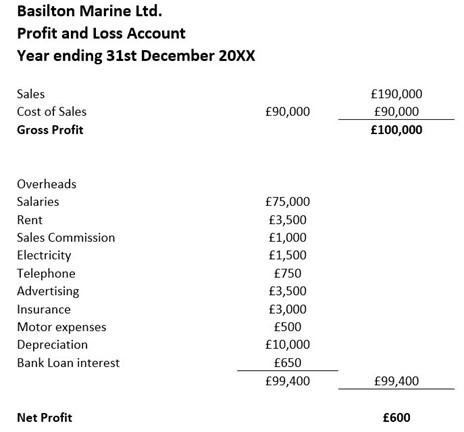
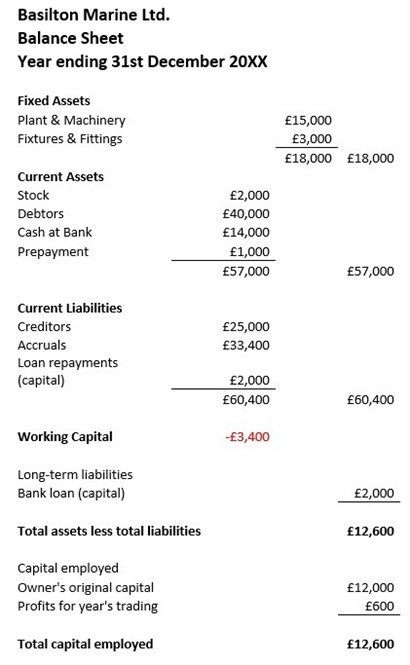
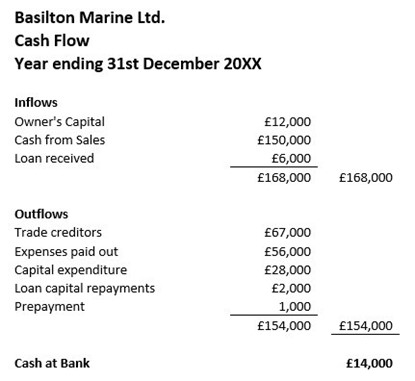
Please examine the details supplied concerning Basilton Marine Ltd. in the Appendix.
A fictional company, Basilton Marine Ltd., is based in Plymouth, UK.
From your detailed examination of the company details and accounts for the first year of trading ending on 31st December 20XX (the date is left deliberately vague), please identify the key features of the business which you consider needing immediate consideration by the owners.
Explain the reasons for your feature selection, over others that may deserve equal attention, and provide guidance on how owners can address the features you have chosen.
In addressing this question, you should focus on the structure of the business, its strategy and direction, priorities etc. as you see them, and explain why the features you choose to investigate should be seen as business priorities. You should support your discussion by using academic literature, as appropriate.
Appendix
Basilton Marine Ltd.
Selected Company Details:
- Basilton Marine Ltd. is a (fictional) small-to-medium sized enterprise located in Plymouth, UK providing bespoke maintenance products to the marine sector. Their premises consists of an upstairs/downstairs shop front area, which is heavily stocked, plus a stock room for storage.
- The company was founded by the owner at the start of 20XX (the year is deliberately left vague), and they have input £12,000 of their own capital into the business, by purchasing 12,000 £1 company shares. The owner has decided not to consider the issuing of dividends year-on-year until the company is well-established, so any profits will be ploughed back into the company.
- The owner has arranged an overdraft facility of £15,000 for the business with a local bank, which has been especially useful during the early months of set-up for the business, when it was used very heavily.
- The owner has also secured a £6,000 bank loan, repayable in equal instalments over three years.
- The owner works full-time at the business, and often puts in unrecorded overtime. They cover all the administrative duties in the business, and act as a general operative when needed. They draw a salary from the business and take commissions for some sales.
- Two general operatives have also been employed on zero-hour contracts at National Living Wage rate of £12.21 per hour. Details of hours worked by the two general operatives are supplied below. Their wages are included in the “Salaries” figure in the Profit and Loss account.
- After helping with initial business set-up in earlier months, general operative 1 has focused mainly on over-the-counter service, product preparation (where necessary), and restocking shelfs from the stock room.
- After helping with initial business set-up in earlier months, general operative 2 has focused mainly on assisting with over-the-counter service, making boatyard deliveries as necessary, stocking the stock room, liaising with suppliers, and generally anything else that needs to be done.
- Fulfilling moderately large orders from boating yards, and over-the-counter sales to the general public constitute the main business activity.
- Credit sales are approximately 70% of total sales.
- The company currently retail in a select range of bespoke maintenance products, including anti-fouling applications, cleaners and polishes, fillers and sealants, epoxy and polyester resins, paint and varnishes, and cleaning tools.
- Most of these products are retailed directly from niche manufacturers, although a few must be prepared onsite, and thus have a relatively short shelf-life (including some epoxies and anti-fouling applications).
- Business is brisk, although not without issues. Emphasis has been placed on maintenance of supplier contracts, whilst building customer share in a crowed local market has been seen as key.
- Storage is becoming a complicated issue, with returns and older stock starting to pile-up and be mixed-up in the store room. A whole consignment, valued at £250 of niche product was lost in a storage mix-up.
- The owner is considering expanding into the sale of safety equipment (such as buoyancy aids, lifejackets, and flares), but is currently uncertain about moving forward. This hesitation stems from concerns about whether they can afford the necessary stock, given the relatively low cash surplus available in the business’s bank account. There is apprehension about whether it’s financially feasible to invest in a new product line while continuing to support existing product lines for year 2 and beyond.
- The owner is considering hiring the general operative 1 full-time at £13.50 per hour, following representations from the worker themselves for fixed hours, and needs to assess whether this is viable. The owner’s ability to work overtime consistently is now under review, as he has new personal life duties to consider. Future considerations:
- A new start-up called Pronto Marine Ltd., has concerned the owner. This new business appears to be advertising aggressively, and appears to be wellfinanced; with a stock range that replicates some of the general-purpose stock catalogue that Basilton Marine Ltd. holds for sale. Niche products, however, are currently unaffected, although the owner has heard reports that a few niche suppliers are in discussion with Pronto Marine about certain product lines.
- A major boatyard in the locale is promising considerable business, worth approx. £50,000 in the next 6 months. However, the owner has heard an existing customer, who owes the company £9,000, is experiencing financial troubles.
- Given the year-end situation the owner has applied for another loan, this time for £9,000 loan (to be repaid over three years).
- For the purpose of securing the loan, the owner has generated financial statements for their first year of trading. These appear below. The owner is currently considering the implications of these.
General Operative Working hours:
| Hours Worked | ||
| Month in Year 1 | General Operative 1 | General Operative 2 |
| January | 40 | 40 |
| February | 40 | 40 |
| March | 40 | 40 |
| April | 28 | 6 |
| May | 32 | 6 |
| June | 34 | 6 |
| July | 36 | 12 |
| August | 40 | 24 |
| September | 40 | 30 |
| October | 40 | 40 |
| November | 40 | 40 |
| December | 32 | 12 |
MLA College Grading Scheme for Undergraduate Modules
| Degree Class | Grade | Numerical Equivalent (%) |
| A+ | 95+ | |
| First | A | 85 |
| A- | 75 | |
| B+ | 68 | |
| Upper second | B | 65 |
| B- | 62 | |
| C+ | 58 | |
| Lower second | C | 55 |
| C- | 52 | |
| D+ | 48 | |
| Third | D | 45 |
| Pass (= or > 40%) | D- | 42 |
| E+ | 38 | |
| Fail (marginal) | E | 35 |
| E- | 32 | |
| F+ | 25 | |
| Fail | F | 15 |
| F- | 5 | |
| No acceptable answer | 0 | 0 |
Marking Criteria
| A | B | C | D | E | F | |
| Content | Fully addresses the assessment brief using all relevant information with few errors | Addresses the assessment brief with most facts relevant and no significant errors | Addresses the assessment brief using core information but some gaps in subject knowledge | Addresses the assessment brief but containing a minimal amount of the required material | A marginal fail, does not contain enough relevant information to address brief and/or contains multiple errors | Clear fail that does not address assessment brief, with totally inadequate or irrelevant information |
| Understanding and Evaluation | Full understanding of topic within wider context. Full critical evaluation with arguments supported by evidence and examples. | Substantial understanding demonstrated. Critical evaluation present with arguments supported by evidence. | Adequate understanding demonstrated although evaluation may be limited with restricted use of evidence | Enough understanding demonstrated but with minimal evaluation and/or evidence offered | Marginal understanding demonstrated that lacks evaluation and evidence | A concerning lack of understanding and evaluation present. |
| Originality/ Independent Thinking | Evidence of considerable insight and independent thinking e.g. by including own views; making connections with other subject areas etc. | Substantially correct independent thinking with links to other areas/studies. | Some individuality within the assessment but not always fully explored | Own views minimally offered and/or displaying scientific naivety | Marginal originality and/or independent thought | No evidence of any valid independent thought |
| Data Analysis and Interpretation | An analytical/discriminating approach to the data, applying appropriate statistics. Comprehensive understanding of implications & limitations of the data | A sound approach to data analysis, applying valid statistical tests. Good understanding of data and associated limitations | Suitable approach to most aspects of data analysis. Valid interpretation but gaps evident | Data analysis attempted but limited, including weak interpretation | Marginal or insufficient data analysis and interpretation | No, or wholly inappropriate, data analysis and interpretation |
| Use of Literature | Evidence of consulting wide range of valid sources of information, especially primary literature. Uses findings to support facts and arguments. Appropriately references sources within the text and in the reference list | Evidence of consulting a range of literature to support facts and statements. Mostly cites references sources in correct format within the text and in the reference list | Evidence of consulting a limited range of literature, often with a reliance on textbook sources. References in text or list may contain errors | Some reference to literature evident but statements not wellsupported. References often incorrectly cited and/or listed | Marginal reference to literature with little attempt to incorporate references into work and/or incorrectly cited. | No, or totally inappropriate reference to literature |
| General Communication Skills | Excellent overall standard of presentation, exhibiting a high standard of English and clarity of expression. Excellent layout and structure of material. Legible handwriting or appropriate use of fonts. Highly effective use of relevant visual material. | High standard of presentation, exhibiting a good standard of English and clarity of expression. Good layout and structure of material. Legible handwriting and use of fonts. Good use of relevant visual material. | Adequate standard of presentation, using acceptable standards of English. Some attention to layout, structure and formatting may be needed. Visual material may need some attention. | Low standard of presentation with grammatical errors. Layout and structure may reduce impact and communication. Use of visual material not well-incorporated | Marginal standard of presentation. Poor use of English with clumsy structure. Handwriting may not be legible and/or inappropriate use of fonts. Visual material typically not relevant. | Totally unacceptable standard of presentation with concerning use of English. No, or totally inappropriate, use of visual material. |
| Independence and Use of Support | Completely self-motivated; works independently or in collaboration with others where relevant. Seeks appropriate support as necessary. Formulates problem and relevant questions prior to seeking advice. Is meticulous in acknowledging support and contribution of others. | Mostly self-motivated and able to work well alone or in team. Seeks appropriate support as necessary. Acknowledges support and contribution of others. | Able to work independently or in a team but may not always access enough support where necessary | Partly relies on others for motivation or to ensure progress and may be reluctant to seek necessary help. Weak team member. Does not always acknowledge sources of support. | Depends on others for motivation or fails to seek necessary advice. Fails to work as member of a team. Work may be highly derivative and/or support not acknowledged. | Fails to start or progress with tasks. Does not seek and/or use help. Makes no contribution as member of a team. Does not acknowledge support and/or plagiarises. |
Get Your MLA603 Coursework Done with Confidence
Many MLA College students struggle with the MLA603 Maritime Regulation and Governance assessment due to complex legal interpretation, case law analysis, and strict Harvard referencing requirements. If applying the Hague-Visby Rules, analysing maritime organisational design, or structuring financial and strategic reports feels overwhelming or time is limited, there’s no need to worry. Students Assignment Help provides governance assignment help aligned with MLA College and University of Plymouth assessment standards. For trust and assurance, you can also review our expert-written uk assignment samples before ordering personalised support for your MLA603 coursework.
Answer