

- CIPD Level 3 3CO01 Business, Culture and Change in Context Assessment Questions: Gearspan Ltd Case
- DL503 Land Law Assignment Brief 2026: Qualifi Level 5 Diploma in Law (Proprietary Estoppel and Case Study)
- CIPD 5LD01 Support Informal and Self-Directed Learning Assessment Brief 2026: Lux-stay Case Study
- SPY00157M Exploring Policy Research Summative Assessment Brief 2026 | University of York
- COM4024 Introduction to Academic Skills and Professional Development Assessment Brief 2026 | Arden University
- VTCT Level 4 UBT501 and UBT503 SAR Assignment Paper B Brief 2026
- CET3016 Enterprise Software Engineering Assignment 1 2026: SunMortgages Analysis and Design | Sunderland
- Unit 8204 Working in Partnership with Others and Unit 8201 Person-Centred Assessment Questions: Level 4 Diploma in Adult Care
- AP503 Working Collaboratively with Healthcare Professionals Assignment Brief 2026
- AP502 Professional Standards within Aesthetic Practice Assignment Brief 2026
- AP501 Legal and Regulatory Requirements in Aesthetic Practice Assignment Brief 2026
- 7FNCE015W Global Banking and Lending Assessment 1, 2026 | UOW
- AP301 Skincare to Support Aesthetic Procedures Assignment Brief 2026
- CO403 Laser Core of Knowledge (J/651/6011) Assignment Brief 2026
- CO402 Client Consultation for Aesthetic Procedures Assignment Brief 2026
- CO401 Health, Safety and Hygiene for Aesthetic Procedures Assignment Brief 2026
- BMG563 Leadership and Change Assessment Brief 2026 | Ulster University
- AP415 Skin Rejuvenation using Dermaplaning (F/650/3429) Assignment Brief 2026
- AP413 Hair Reduction using Laser, Light and Energy-Based Devices Assignment Brief 2026
- AP412 Skin Rejuvenation Using Laser, Light and Energy-Based Devices (A/650/3427) Assignment Brief 2026
Arrange the following in order of increasing size in the asymptotic limit that State the definition of what it means to write: Mathematics Assignment, UO, UK
| University | University of Oxford (UO) |
| Subject | Mathematics |
- Arrange the following in order of increasing size in the asymptotic limit that δ → ∞:

- * State the definition of what it means to write f(x) ∼ g(x) as x → a. Then, construct an asymptotic behavior for the following functions in the given limits:
* 4 cosh x as x → ∞.
* x 2sin x as x → 0.
* cot x as x → π. - Consider the polynomial x 7+Ex3 = 2 which has one purely real solution. Find an approximation of this root in the asymptotic limit that E → 0. Find as many terms as you need to ensure that the solution is accurate to 4 d.p when E = 0.01. Comment on how you are assessing whether the requisite accuracy has been obtained.
- The Lambert-W function, W(x), is defined by solutions to the equation x = W(x) exp. Given that W(1) = 0.567143, use perturbation methods to find a two-term approximation of W(1.01).
- Consider the initial value problem x 0 + Ex = t with x(0) = 2. Find a two-term approximation of the solution in the asymptotic limit that E → 0.
- The error function is defined via the integral
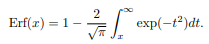
Use repeated integration by parts to find a three term approximation of the value of the error function in the limit that x → ∞. Use this to approximate the values of Erf(1), Erf(2) and Erf(3). How does your values compare to the exact values of Erf(1) = 0.842701, Erf(2) = 0.995322 and Erf(3) = 0.99978 to 6 d.p.?
Do You Need Assignment of This Question
Are you searching for someone to write my BTEC assignment? then UK Assignment Help has a strong team of top British writers who have academic experience to provide flawless assistance on HND assignments, CIPD assignment,s and management assignment within the deadline.
Answer