
- BSC006 Financial Trading Assessment Coursework Brief 2026 | Loughborough University
- CIPD Level 7 Unit 7OS01 Advanced Employment Law in Practice Assignment Example 2026
- CIPD Level 7 Unit 7LD03 Designing Learning to Improve Performance Assignment Example 2026
- CIPD Level 7 Unit 7LD02 Leadership and Management Development in Context Assignment Example 2026
- BUS6012 Governance, Law and Ethics Assessment Brief 2026 | Arden University
- CIPD Level 7 Unit 7LD01 Organisational Design and Development Assignment Example 2026
- CIPD Level 7 Unit 7CO04 Business Research in People Practice Assignment Example 2026
- CIPD Level 7 Unit 7CO03 Personal Effectiveness, Ethics and Business Acumen Assignment Example 2026
- CIPD Level 7 Unit 7CO02 People Management and Development Strategies for Performance Assignment Example 2026
- CHE9001 Energy Integration and Sustainability Assignment Question 2026 | University of Lincoin
- EGR9045 Research Methods and Engineering Innovation Assessment Brief 2026 | University of Lincoln
- CIPD Level 7 Unit 7CO01 Work and Working Lives in a Changing Business Environment Assignment Example 2026
- MKT09406 Direct & Digital Marketing Written Assignment 2026 | ENU
- 6406ELE Further Electronic Design Coursework Assignment 2026 | LJMU
- CIPD Level 5 Unit 5OS07 Wellbeing at Work Assignment Example 2026
- CIPD Level 5 Unit 5OS06 Leadership and Management Development Assignment Example 2026
- CIPD Level 5 Unit 5OS05 Equality, Diversity and Inclusion Assignment Example 2026
- CIPD Level 5 Unit 5OS04 People Management in an International Context Assignment Example 2026
- CIPD Level 5 Unit 5OS03 Learning and Development Essentials Assignment Example 2026
- CIPD Level 5 Unit 5OS02 Advances in Digital Learning and Development Assignment Example 2026
BTM4FUB Fundamentals of Business Finance Assignment 2 Brief 2026 | CCCU
| University | Canterbury Christ Church University (CCCU) |
| Subject | BTM4FUB Fundamentals of Business Finance |
BTM4FUB Assignment 2 Brief 2026
| Programme: | Business & Tourism Management | ||
| Level: | Level 4 | Module Title: | Fundamentals of Business Finance |
| Module code: | BTM4FUB | Module leader/s: | Man Sheung Lam / James Mburu / Naveed Shah |
| Assignment No: | 2 | Assignment Type: | Written Report |
| Assignment weighting %: | 50% | Assignment Word Count: (or equivalent) | 1,500 |
| Penalties | All penalties that are listed at the end of this document in the Table of Penalties. | ||
Submission Deadlines
| Summative Deadline | BTM4FUB_JUN24: Individual Report – First submission | Global Banking School Friday, 13th February 2026 before 14:00 |
| Late Submission | BTM4FUB_JUN24: Individual Report – Late submission | Global Banking School Tuesday, 17th February 2026 before 14:00 |
| Resubmission | BTM4FUB_JUN24: Individual Report – Resubmission 1 | Global Banking School Monday, 7th April 2026 before 14:00 |
| Grade & Feedback release Dates | All Grade and Feedback release dates are 21 days after the submission date. If an assignment deadline is Monday 1st 2:00pm then the grade release date will be Monday 22nd 2:00pm |
Module Learning Outcomes
| This assignment has been designed to provide you with an opportunity to demonstrate your achievement of the following module learning outcomes: | |
| Module Outcome 2 | Understand and explain the purposes of the financial information produced by businesses. |
| Module Outcome 3 | Explain the structure and terms used within the main financial statements and undertake the analysis and interpretation of financial statements. |
Module 6 Fundamentals of Business Finance Individual Written Report
Score Higher in BTM4FUB with Expert Financial Analysis Help
Assignment Requirements
Overview
This individual report assesses your ability to interpret and analyse financial information, a critical skill for informed business planning and decision-making. Set within the realistic scenario of your role as a Business Planning Assistant at Echo Journeys, you will compile a report for senior management. This task requires you to demonstrate your understanding of the purpose and characteristics of financial information, explain key accounting concepts, and apply ratio analysis techniques to evaluate the company’s performance, thereby providing a solid foundation for strategic recommendations.
Assignment task/s to be completed
You are required to write a 1,500-word report to the Operations Manager of Echo Journeys. The report must be professionally presented and address the following areas in a coherent, narrative style:
Importance and Quality of Financial Information: Discuss the critical role that financial information plays in business decision-making. Identify and explain five qualitative characteristics of good financial information (such as relevance, reliability, comparability, understandability, and timeliness). Elaborate on how these characteristics meet the needs of different stakeholders, including management, investors, creditors, and regulatory bodies, supporting your discussion with relevant examples.
Key Accounting Concepts: Define and explain the following fundamental accounting concepts, providing clear examples to illustrate their meaning and application within a tourism business context:
- Revenues, Cost of Services, Gross Profit, and Operating Profit.
- Assets, Liabilities, and Owner’s Equity.
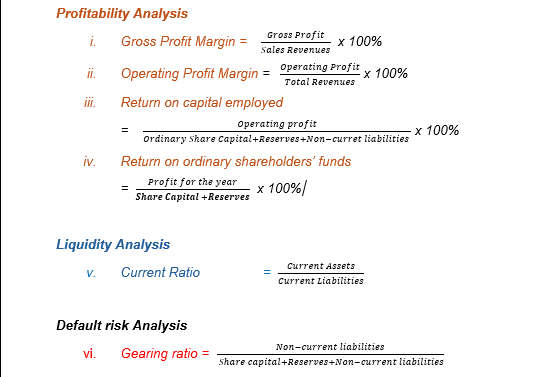
Financial Ratio Analysis (Atrill & McLaney, 2018):
Using the financial statements provided for Echo Journeys (2022-2024), calculate the following ratios and interpret the company’s performance development over this period:
- Profitability:Gross Profit Margin, Operating Profit Margin, Return on Capital Employed (ROCE) and Return on Ordinary Shareholders’ Funds.
- Liquidity:Current Ratio.
- Default Risk:Gearing Ratio.
Your analysis should not merely present the calculations but should interpret what the trends indicate about the company’s financial health and performance.
Limitations of Analysis: Conclude your financial evaluation by discussing the inherent limitations of using ratio analysis to assess a company’s performance, demonstrating a criticall understanding of the tool’s boundaries.
References
You must provide a complete reference list for all direct and indirect citations, including those for text, images, graphs, and tables. A minimum of 10 different sources is required, and you must adhere to the CCCU Harvard Referencing Guide available on Moodle.
Additional Information required to support completing the Tasks Above
This Assignment will be Anonymously marked.
No Front Sheet is to be submitted, or student name or student ID is to appear anywhere in your assignment submission as it will be anonymously marked.
- Echo Journeys
- Statement of Profit and Loss Account
- (Income Statement)
- for the year ended on 31st December
| 2022 | 2023 | 2024 | |
| £’000 | £’000 | £’000 | |
| Sales Revenues | 8,630 | 9,493 | 11,240 |
| Cost of Services | (5,005) | (5,316) | (5,395) |
| Gross profit | 3,625 | 4,177 | 5,845 |
| Administrative Expenses | (705) | (875) | (1,586) |
| Marketing Expenses | (1,254) | (1,043) | (982) |
| Depreciation | (630) | (740) | (804) |
| Operating profit (EBIT) | 1,036 | 1,519 | 2,473 |
| Interest Expenses | (68) | (72) | (108) |
| Profit before tax | 968 | 1,447 | 2,365 |
| Corporate Tax | (194) | (289) | (473) |
| Profit for the year | 774 | 1,158 | 1,892 |
- Echo Journeys
- Statement of Financial Position
- (Balance Sheet)
- as on 31st December (figures are £ ,000)
| 2022 | 2023 | 2024 | |
| £’000 | £’000 | £’000 | |
| Non-current Assets | |||
| Property, Plant and Equipment | 30,147 | 40,522 | 60,887 |
| Current Assets | |||
| Trade Receivables | 2,110 | 2,650 | 3,340 |
| Cash at Bank | 630 | 580 | 720 |
| Total Current Assets | 2,740 | 3,230 | 4,060 |
| Total assets | 32,887 | 43,752 | 64,947 |
| Equity and Liabilities | |||
| Ordinary Share Capital | 6,800 | 6,800 | 6,800 |
| Retained Profits | 8,682 | 11,869 | 14,220 |
| Total Equity | 15,482 | 18,669 | 21,020 |
| Non-Current Liabilities | |||
| Long term debts | 14,291 | 21,916 | 40,804 |
| Current Liabilities | |||
| Short term debts | 2,280 | 2,305 | 2,203 |
| Trade Payables | 834 | 862 | 920 |
| Total Current Liabilities | 3,114 | 3,167 | 3,123 |
| Total Equity and liabilities | 32,887 | 43,752 | 64,947 |
Recommended and Core Sources for Research
| Referencing Style | CCCU Harvard Referencing Style. |
| Recommended and Core Sources for Research | Atrill, P and McLaney, E.J. (2018) Accounting and Finance for Non-Specialists. 11th edition. Harlow: Pearson Education. Atrill, P and McLaney, E. J. (2018) Financial accounting for decision makers. 9th edition. Harlow: Pearson Education. Weetman, P. (2019) Financial Accounting. 8th edition. Harlow: Pearson Education. McLaney, E. (2009) Business Finance: Theory and Practice. 8th edition. Harlow: Pearson Education. Watson, D. and Head, A. (2019) Corporate finance: principles and practice. Harlow: Pearson Education. Brealey, R.A., Myers, S.C., Allen, F. and Mohanty, P. (2012) Principles of corporate finance. Tata McGraw-Hill Education |
Format of your submission and how your assignment will be assessed
This assignment should be submitted electronically via Moodle (module tutors will discuss this process with you during class time).
You must submit your work in Microsoft WORD document format.
- You can submit your work as many times as you like before the submission date. If you do submit your work more than once, your earlier submission will be replaced by the most recent version.
- Once you have submitted your work, you will receive a digital receipt as proof of submission, which will be sent to your forwarded e-mail address (provided you have set this up). Please keep this receipt for future reference, along with the original electronic copy of your assignment.
- You are reminded of the on academic misconduct, which can be viewed by following the links at the end of this document. In submitting your assignment, you are acknowledging that you have read and understood these regulations.
- It is the complete and sole responsibility of the student to upload their assessment to Turnitin for Marking prior to the specified deadline. Students should not request lecturers or SST’s to submit assessments on their behalf as they are unable to do so.
- To avoid uploading issues, students should aim to upload their assessment several hours prior to the deadline to avoid Turnitin issues around the deadline time or accidentally submitting to the wrong submission link. It is recommended to check that the assessment that has been uploaded is able to be read after you have uploaded it and if not to re-upload it. Contact the SST on your campus if you have any issues.
- Any assessment submitted after the specified deadline will incur a late penalty as specified in CCCU Academic regulations unless prior approval has been granted for Exceptional Circumstances.
Your work will be assessed on the extent to which it demonstrates your achievement of the stated learning outcomes for this assignment (see above) and against other key criteria, as defined in the grading descriptors. If it is appropriate to the format of your assignment and subject area, a proportion of your marks will also depend on your use of academic referencing conventions.
The assignment will be assessed against the specified rubric as uploaded to Moodle.
Marking Scheme / Rubric – The Marking Scheme (otherwise known as a rubric) is available on the Module Assessment Tab on Moodle.
Submission Requirements
| Submission Platform | This assignment should be submitted electronically using Moodle to the Module Submission link |
| Submission Date &Time | All submission & resubmission dates and time are as stated at the beginning of this Assignment brief. You should submit your Assignment for all deadlines earlier than 2:00pm on the date stated. Late submissions can be accepted for Summative Submissions only up to a maximum of 2 working days after the submission deadline. This does not apply to resubmission deadlines. A 10-mark deduction will be made by CCCU for all late submissions. Work submitted more than two working days after the deadline will not be accepted and will be recorded as a non-submission. Assignments submitted to the Resubmissions deadlines will be capped at 40 by CCCU. If you are affected by events which are unexpected, outside your control and short-term in nature (i.e. lasting one to two weeks), under the exceptional circumstances procedure you may be eligible for: Self-Certification – A seven day extension to your coursework. Students are allowed a maximum of 2 self-certification request per academic year can be requested. Please note that Examinations and time-constrained test are not eligible for the seven day self-certification request. Extenuating Circumstances – A 14 day extension to your coursework but there must be evidence to support the request. |
CCCU Harvard Referencing Support for Finance Assignments
Assessment Infractions
| Issue with the Assignment | Process to implement |
| Suspected Academic Misconduct or Breach of Academic integrity | Insert the following text with your rationale for the AMC referral. As part of your reasoning, please ensure to include the type of academic misconduct suspected from the table on page 7 of CCCU’s Student Academic Integrity Policy alongside an explanation. This assessment has been identified as having potential Academic Misconduct because [insert reasoning for AMC referral with an explanation on top of any % scores that may be part of the referral]. The assessment will be analysed by the AMC review team, and you will receive further communication from them as to the next step in the AMC process. Until the AMC investigation into your assessment is concluded your assessment will remain at grade 0. Marker’s Name: Date: dd/mm/year Similarity Score at the time of marking: AI Score (if relevant to the referral) |
| The assignment is more than 10% over the prescribed wordcount i.e. for 3,000 words, if 3,400 is submitted excluding the cover page, table of contents, references and appendices. | A 10% deduction applied to the overall maximum grade that is manually entered by the Lecturer. This deduction means an assessment can fail if the resulting grade is below 40/100. For example, if the mark for the assignment was 68 out of a possible maximum of 100 before deductions, the lecturer would deduct 10 marks, and the mark will be 58. If the mark for the assignment was 30 out of a possible maximum of 50 before deductions, the lecturer would deduct 5 marks, and the mark will be 25. Written feedback must also state ‘This assignment is 10% over the wordcount and has a penalty equal to 10% of the maximum available marks applied to it’. |
| Students not working in their groups as agreed by the lecturer. | This assignment will be graded a Fail. The lecturer will grade as 1 and the written feedback will state ‘This submission was not completed in the designated group’. Please note: This does not apply in either of the following circumstances:
|
| For a presentation assignment that requires oral delivery, and the student does not present in person. | This assignment will be graded a Fail. The lecturer will grade as 1 and the written feedback will state ‘As you did not present in class, this assignment is a Fail.’ Please note: This does not apply if there has been a reasonable adjustment to a student’s assignment based on a Learning Support Plan. |
| If the student has uploaded their submission in an incorrect file type (a file type that is not authorised in the Assessment Brief). | This assignment will be graded a Fail. The lecturer will grade as 1 and the written feedback will state ‘This is an incorrect submission as it does not follow the assignment brief instructions. |
| If the summative assignment is group work and the resubmission is not changed to individual work.
| This assignment will be graded a Fail. The lecturer will grade as 1 and the written feedback will state ‘This resubmission should be individual assessment’. |
| If the summative assignment is individual presentation and the resubmission does not follow the resubmission assignment brief.
| This assignment will be graded a Fail. The lecturer will grade as 1 and the written feedback will state ‘This assessment should follow the resubmission brief’. |
| Where a written assignment has text that is unable to be read by Turnitin because it is either a graphical image (excluding Presentations & Posters); for example, a screenshot or the assignment is written within text boxes on each page. | This assignment will be graded 0 and the written feedback should state ‘This assignment is unreadable by Turnitin and cannot be checked for Academic Misconduct. It has been referred for an AMC meeting’. The assignment will then be referred for Academic Misconduct investigation. |
| For assessments where Referencing is one of the grading criteria:
An assignment has a reference list, but no citations. Or citations, but no Reference List | The reference rubric criteria is not moved and that criteria will remain at zero. Written feedback should state ’The reference criteria has been graded Zero as no citations have been used/no Reference List has been provided. Please include citations in your assignment to support the academic points being made/a Reference List of your citations’. |
| For assessments where Referencing is one of the grading criteria:
An assignment has no citations and no reference list. | Foundation & Level 4 – The reference rubric criteria is not moved and that criteria will remain at zero. The written feedback will state ‘Please ensure that you use citations with a corresponding Reference List to support your assignment submission’. At Level 5 and Level 6 this would be graded as Fail. The lecturer will grade as 1 and written feedback will also show ‘This assignment has no citations and no reference list’. |
| Where False references are included in an assignment and cited from
Inflated Reference List | This will be referred for Academic Misconduct as per the first box. Uncited Reference List entries on their own do not merit an AMC referral, but feedback should highlight them and ask the student to refrain from doing this. |
Generative AI
CCCU and GBS have provided guidance on how students can use Generative AI to support their knowledge and education. Please see the link below that provides further guidance on the topic and also includes some case studies that students should familiarise themselves with.
Welcome to your generative AI guidance – Canterbury Christ Church University
GenAI has a broad range of uses and a student may use GenAI tools for:
- Time management
- Planning an assignment
- Generating ideas for a topic
- Learning new concepts (check key facts with reputable sources)
- Developing critical writing skills such as editing and proofreading
- Self-directed study assistance
- Creating revision materials.
Students may NOT use GenAI applications as indicated below
The use of an artificial intelligence tool/source/programme/platform, such as ChatGPT or any other GenAI software, to generate material which is submitted as if it is the student’s own work without clear referencing is not permitted.
Generative AI should not be used to produce the original text required in summative assessments. This includes:
- The summary and analysis of peer reviewed literature.
- The summary and analysis of original data.
- The synthesis of ideas, discussion or conclusions.
- The generation of new findings or creation of graphs, charts or images.
English Proficiency and the use of GenAI.
Students can make use of a spelling and grammar checker to correct misspelled words and to correct grammatical errors. However, if the GenAI offers to rewrite sentences or create sentences this may be seen as an unacceptable use of GenAI.
Students must understand the sentences created including the overall meaning as well as the meaning of specific words
Student Integrity and Academic Misconduct
The values of student integrity expected by GBS and CCCU are:
- Honesty – being clear about what is your work and where your ideas come from other sources.
- Trust – others can have faith in you being open about your work and acknowledging others’ work.
- Fairness – you do not try to gain an unfair advantage in using others’ work.
- Responsibility – you take an active role in applying the principle of Academic Integrity to your work.
- Respect – you show respect for the work of others.
Peer-support:
Students might choose to get support from their peers when preparing assessments, such as discussing the subject of the assessment, exchanging ideas, and receiving suggestions for improving the work. This is peer-support, and the GBS accepts this as a reasonable expectation when completing assessments. However, peers must not make any changes to anyone’s assessments as such actions could lead to allegations of academic misconduct.
Use of English as the medium of assessment:
Students cannot write an assessment in another language and subsequently translate their work into English or have it translated by any form of third-party. Use of translation software or third-party translators is a form of academic misconduct.
Proofreading:
Students can make use of Microsoft Word’s grammar and spell-checking functions but the use of Grammarly is not allowed as it uses AI text generation. If student’s use third-party proofreaders, these cannot make any changes that alter the assessment in anyway including correcting language or citation format errors. Third-party alterations to the assessment are a form of academic misconduct.
Plagiarism
Plagiarism can be defined as incorporating another person’s material from books, journals, the internet, another student’s work, or any other source into assessment material without acknowledgement. It includes:
- Using exactly the same words (sentences, phrases or even expressions not in everyday use, invented or created by an author to explain an idea) as used originally
- Rephrasing by making slight adjustments
- Paraphrasing in a way which may deceive the reader as to the source.
- Plagiarism in whatever form it takes is form of academic misconduct.
Collusion:
If students submit work for assessment that is falsely presented as the student’s own work but was jointly written with somebody else; this is a form of academic misconduct.
Duplication/Self-Plagiarism:
The inclusion in assessments of a significant amount of identical or substantially similar material to that already submitted for assessment by the student and graded for the same course or any other course or module at GBS or elsewhere is classed as self-plagiarism. It does not include a resubmission of the same piece of work allowed by the examiners in an improved or revised form for reassessment purposes. Self-plagiarism is a form of academic misconduct.
Further clarification of the above can be found in CCCU’s Academic Misconduct documents below.
- CCCU Student Academic Misconduct Procedures can found below: Please click the link to Open.
Student-Academic-Misconduct-Procedures-staff-students.pdf
- CCCU Student Academic Integrity Policy can be found below: Please click the link to Open.
Student-Academic-Integrity-Policy.pdf
Complete YourBTM4FUB Fundamentals of Business Finance Assignment at CCCU
Many CCCU and Global Banking School students find the BTM4FUB Fundamentals of Business Finance Assignment 2 challenging due to the need for accurate ratio calculations, financial statement interpretation, and critical discussion within a structured 1,500-word business report. There’s no need to worry—Students Assignment Help provides expert business assignment help fully aligned with CCCU assessment criteria. For trust and clarity, you can also review our finance assignment samples prepared by experienced accounting and financial analysis specialists. Order today tourism assignment help and receive a fully customised, plagiarism-free, human-written BTM4FUB report prepared only for you.
Answer