

- 7LMS2116 Puzzles and Paradigms in International Relations Coursework 1 Brief 2026-27: Critical Theoretical Commentary | University of Hertfordshire
- Legal Systems, Cultures and Ideas Summative Assessment 1 2026: Mapping Exercise and 500-Word Commentary | University of Westminster
- CRI4003 Becoming a Criminologist Coursework: Personal Reflection Mini Report or Video Presentation | Arden University
- Study Strategies and Academic Development Portfolio Assessment Guide October 2026: Note-taking, Time Management and SMART Goals | GBS Level 3
- Urban Building Brief: An Urban Room for Glasgow – Civic Infrastructure Studio Project | Glasgow School of Art
- Urban Housing Brief: Living in Agreement in Tradeston, Glasgow – Block and Individual Investigations | Glasgow School of Art
- AT4.2 Urban Building Integration Architectural Technology Assignment: Structure, Envelope, Fire and Embodied Carbon | Glasgow School of Art
- IMAT1701 Foundations of Computing Portfolio Assignment 2026/27: StudentHub Network Design and Ethical Analysis | DMU
- EBB_6_060 Contract Administration Group Coursework Brief 2026/27: Digital Tools, Dispute Avoidance and Blockchain in Retrofit Projects | LSBU
- EG7004 Soil Structure Engineering Coursework Brief 2026/27: Deep Braced Excavation Design with CIRIA C517 and FREW | UEL
- NVQ Level 5 Unit 507 Safeguarding in Adult Care Assignment Brief 2026
- EN7068 Leadership, Stakeholders and Data Analytics Coursework Brief 2026
- ENGE2003 Engineering Project Management Coursework 2, 2026 | DMU
- 55-500223 Analogue and Digital Electronic Design Coursework Brief 2026 | SHU
- EGR9017 Power Systems Assessment Coursework 1 Brief 2026 | University of Lincoln
- 7BIOM037W Systems Biology Coursework 1 Report 2026 | University of Westminster
- NCFE CACHE Level 3 Unit 8 Professional Practice Portfolio 1 Coursework 2026
- NCFE CACHE Level 3 Unit 9 Supporting Emergent literacy Coursework 2026
- 6WBS0035/ 6WBS0036 Digital Economy CW1 Assignment Brief 2026 | UOH
- DSM060 Data Science Research Topics Coursework Assignment 2026 | UOL
6CCE3EAL: Imagine that we have a solid rod, and we apply heat to the rod: for example, by holding it under a flame. Intuitively, we know that if we hold: Engineering Algorithms Coursework, KCL, UK
| University | King's College London (KCL) |
| Subject | 6CCE3EAL: Engineering Algorithms |
Imagine that we have a solid rod, and we apply heat to the rod: for example, by holding it under a flame. Intuitively, we know that if we hold the rod at one end, then eventually we will feel the temperature rising, depending on what the rod is made from: metal rods will heat quickly, whereas a glass rod might not heat at all.
At the molecular level, the ‘hot’ molecules underneath the flame are vibrating rapidly, which causes their adjacent neighbors to also start oscillating. This process repeats, and the further we are from the flame, the more the temperature ‘spread out. If we remove the flame, then the temperature of the rod will eventually decay until it reaches the temperature of the room.
This process is called diffusion. Visually, you can think about adding a small amount of dye to a large container of fluid at rest. Introducing the dye via a syringe at a specific point, we would eventually expect the dye to diffuse amongst the fluid until it can no longer be seen.
To model this mathematically, consider a solid rod of length L and constant cross-section, and assume that the temperature is constant in each cross-section. Then the temperature can be expressed as a function of both one-dimensional location x, where 0 ≤ x ≤ L and time t ≥ 0. We can therefore express the temperature as a function u(x, y). If the thermal conductivity of the material is given by
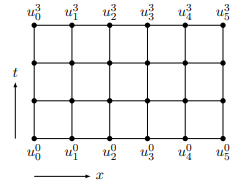
a constant α, then we can show that u observes the partial differential equation.

This is called the heat equation.
To solve the heat equation, we also need some additional information, in the same way, that an ODE needs to know an initial value to give a unique answer. In particular, we need to know two things:
- an initial condition: what is the temperature at t = 0?
- the boundary conditions: what is the temperature at x = 0 and x = L?
For this assignment, we will assume the following:
- the initial temperature is given by some known function f(x), so that u(x, 0) = f(x);
- we fix the temperature at each end of the rod, so that u(0, t) = a and u(L, t) = b, where a and b are constants.
Buy Answer of This Assessment & Raise Your Grades
Students Assignment Help UK is a leading provider of CIPD assignment help. We have a team of experienced writers who are familiar with the CIPD curriculum and can help you with all aspects of your assignment, from research to writing and editing. So if you need online assignment help with CIPD, you’ve come to the right place.
Shared with

Answer