
- EGR9017 Power Systems Assessment Coursework 1 Brief 2026 | University of Lincoln
- 7BIOM037W Systems Biology Coursework 1 Report 2026 | University of Westminster
- NCFE CACHE Level 3 Unit 8 Professional Practice Portfolio 1 Coursework 2026
- NCFE CACHE Level 3 Unit 9 Supporting Emergent literacy Coursework 2026
- 6WBS0035/ 6WBS0036 Digital Economy CW1 Assignment Brief 2026 | UOH
- DSM060 Data Science Research Topics Coursework Assignment 2026 | UOL
- LL5306 Commercial Law Assessment Coursework Brief 2026 | Kingston University
- M22319 / M33098 Numerical Skills & Economics Assessment Coursework | UOP
- BMG872 Global Strategy Development and Implementation Individual Assignment CWK Brief 2026
- LLB020N204A Law of Property Assessment Coursework Brief 2026
- BS3397 Microeconometrics Coursework Assignment Brief 2026 | AU
- UMAD47-15-M Managing Finance Assessment Coursework Brief | UWE
- BST851 Business Data Analytics Assessment Coursework 2026
- MMM143 International Business and the World Economy Coursework 2026
- EMS402U Engineering Design Coursework Project Report 2026 | QMUL
- 25BSC565 Fundamentals of Strategic Management Coursework Brief
- MARK5025 Contemporary Marketing Communications Assessment Coursework Brief 2
- GEEN1127 Design and Materials Individual Coursework Brief 2025-2026 | UOG
- BPS319 PBL 3 Natural Product Chemistry vs Kinetic Isotope Effects Coursework | UOL
- LD7098 Cyber Security Principles Coursework Assessment 2025-26 | Northumbria University
BARC0087 Structures Materials & Forming Techniques Coursework 2026 | UCL
| University | University College London (UCL) |
| Subject | BARC0087 Structures Materials & Forming Techniques |
BARC0087 Coursework
Building Study “BUILDING STORIES”: An illustrated case study and personal assessment of an existing building
Architecture Coursework Description
Weighting: The coursework accounts for 100% of the mark for the module.
Format: ‘BUILDING STORIES’: An illustrated case study and personal assessment of an existing building
Students are required to apply their understanding of the content of the lecture series and their own experience to a building case study. They are encouraged to:
- Develop a personalised and richly illustrated document that examines the physical, tactile and tectonic qualities of a selected building;
- Consider the idea that all buildings are prototypes in one form or another
- Use this study creatively: consider how it might inform your final studio design project.
- Refer to the module learning outcomes and address these in appropriate Coursework sessions.
The Buildings Students will choose a building from a list supplied by Module Coordinators.
1.) Cover
2.) Site Context Analysis
3.) History
4.) Vital Statistics
5.) Materials Analysis
6.) Structural Analysis
7.) Construction Process & Impact
8.) Interpretive Model
9.) Conclusion
10.) Bibliography & References
Submission
10no. sheets (minimum) 20no. sheets (maximum) A3 landscape format
1.) Cover (5pts) – Title, student number, date (anonymous submission – no names please). anonymous submission
2.) Site Context Analysis (10pts) – How might the place and site have influenced the designers?
3.) History (10pts) – How might the site’s history have influenced the designers and the building?
4.) Vital Statistics (10pts) – Dimensions, weight, time from concept to completion, cost. Who was involved and what were their roles? Please avoid large page-filling company logos!
5.) Materials Analysis (15pts) – “The Raw and the Cooked” – Out of what and how might the main building elements have been made and assembled? What are the qualities of the materials used?
6.) Structural Analysis (15pts) – What type of structure is your building – a frame, a shell, a tension structure, a compression structure, a hybrid, a beam? Diagrams including load paths, forces, etc. How does the structure deal with vertical and horizontal forces and transfer loads to the ground? Please be graphic!
7.) Construction Process & Impact (10pts) – How might the building have been fabricated and built?
Environmental Statement – This is not an environmental analysis but, overall, is your building an environmentally conscious project? Why yes or no and how might it have been improved or not?
Buiing Statement – How might fire and safety have been considered by the designers regarding the structure and materials employed in your
8.) Interpretive Model (15pts) – Photos and analysis of a 3- D personal response. Make a testable section of your building and play with it by loading it up with measurable weight, observe how the structure responds to loading, and try to determine how the structure works.
9.) Conclusion (10pts) – Conclusive thoughts about the application of structures & materials of your study building?
10.) Bibliography & References – All non- original text and images, including AI- generated, must be noted and/or credited.
Helpful Hints
The document will be richly illustrated with your sketches and drawings, images, photographs, and other visual material you deem to be usefully related in a manner that is inventive and imaginative.
Research documents generally benefit from a combination of attractive graphics, clarity and consistency of organization, conciseness of content, and completeness in dealing with the subject. This applies to the documentation of this Coursework as well. The Coursework may be hand- generated, digitally composed, or a combination thereof.
In any case, the quality of the presentation must be considered as it is important to the assessment. Any stock images used must be credited along with all references.
Each student should submit the following format
An electronic version of the report via the module Moodle page. This should be in PDF format compiled as a single file incorporating all sheets. The sheets may be composed in a way the student feels is appropriate and best communicates their research and thoughts. Work must be graphically clear, consistently laid out, and self- explanatory.
Documents must be titled, including the student’s student number and course code. ALL reference sources of text and images must be acknowledged. Please keep total file sizes within 10Mb.
The Coursework submission date is: 12pm noon on Thursday 26th February 2026.
Case Study Buildings List
1.) Hungerford Bridge: Isambard Kingdom Brunel/Lifschutz, Davidson, Sandilands
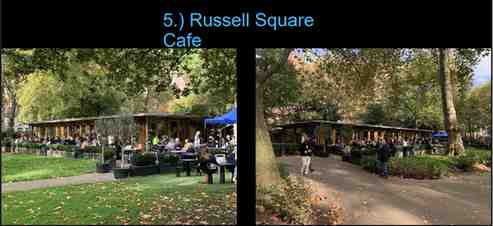
2.) Russell Square Cafe: Knox Bhavan
3.) Esperance Bridge: Moxon Architects
4.) Peckham Library: Alsop & Stormer
5.) Lincolns Inn Fields Cafe: Unknown architect
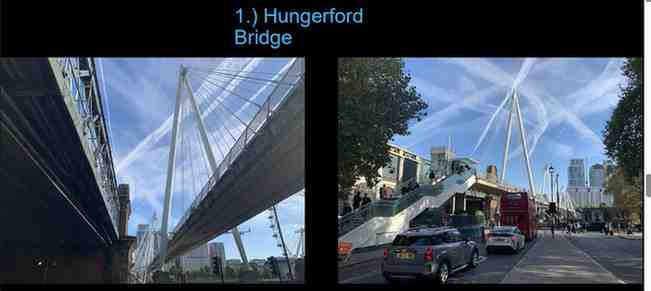
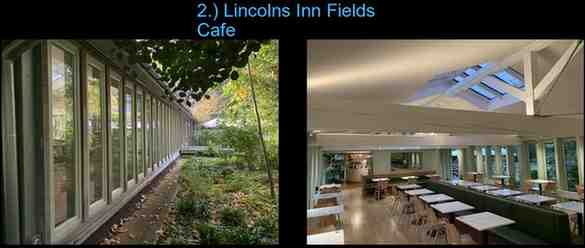
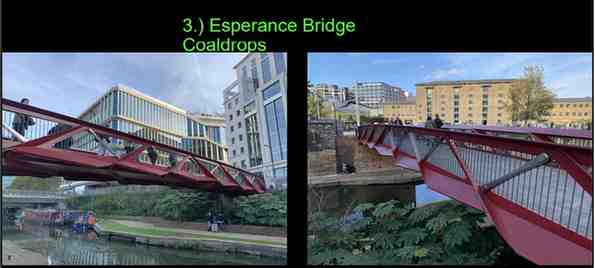
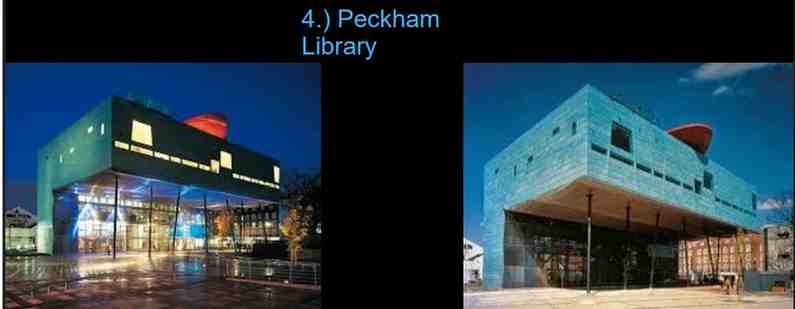
Coursework & Term 1 & 2 Dates
Term 1
Monday 13 October: Coursework Launch Monday 10 November: Subject Buildings selected Monday 17 November: Subject Building Visits
Term 2
Monday 12 January: Coursework Workshop No.1 (full day) & Draft Submission opens Thursday 22 January: Coursework Draft Submission Monday 26 January: Coursework Workshop No.2 (full day) Monday 3rd February: Coursework Feedback Returns
Coursework Submission: 12pm noon on Thursday 26th February 2026
See Common Timetable for times and locations
Your next step:
Select your buildings ready for Seminar 4 on the 27
th of October.
We will let you know how to submit your selections to us
Struggling with BARC0087 Structures, Materials & Forming Techniques Coursework?
UCL architecture students often struggle with BARC0087 Structures, Materials & Forming Techniques coursework because creating an illustrated BUILDING STORIES case study demands deep structural understanding, material analysis, and high-quality visual presentation. Balancing research, drawings, interpretive models, and critical reflection within strict A3 submission requirements can be challenging. There is no need to worry, as Students Assignment Help provides professional architecture coursework help aligned with UCL academic standards. For trust, students can review our coursework samples. Order your BARC0087 coursework today through our online assignment helper and receive 100% original, well-illustrated work tailored to your chosen building.
Answer